📖 Story
اضغط على أي كلمة لسماع نطقها
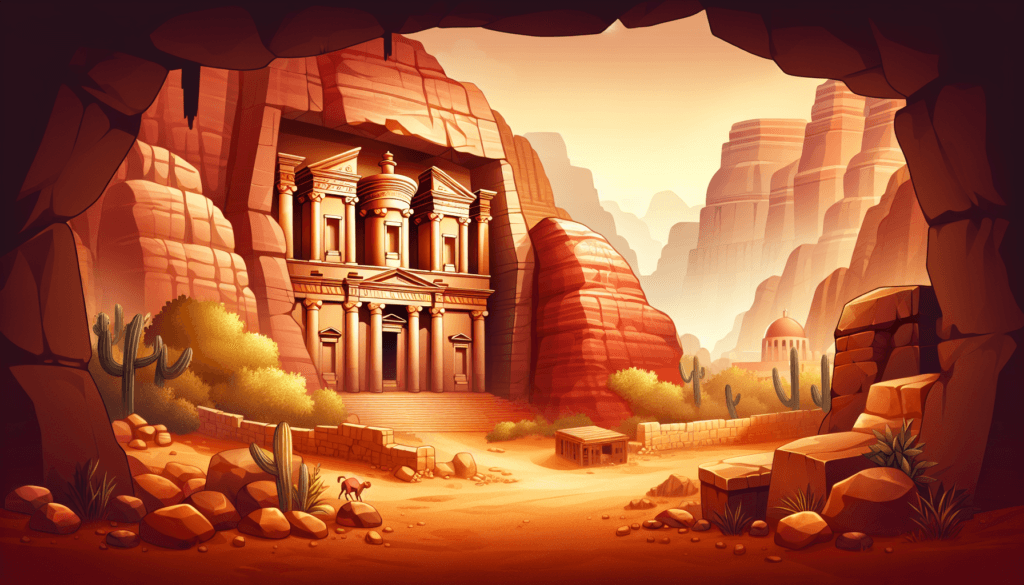
Nestled in the heart of the Jordanian desert lies the ancient city of Petra, a marvel of human craftsmanship and ingenuity. This archaeological wonder is known for its intricate rock-cut architecture and pink sandstone cliffs, earning it the nickname "Rose City." Established around 400 BC as the capital of the Nabataean Kingdom, Petra became a crucial crossroads for trade routes linking Arabia, Egypt, and the Mediterranean.
Visitors to Petra are often amazed by the Siq, a narrow gorge that serves as the entrance to the city. As they walk through this natural passage, they are greeted by Al-Khazneh, or "The Treasury," with its grand façade carved directly into the sandstone cliff. This iconic structure captures the beauty and mystery of Petra, leaving travelers in awe of its scale and detail.
Today, Petra is a UNESCO World Heritage Site, attracting tourists from around the world. To preserve its beauty, visitors are encouraged to explore the city on foot or by camel, just as the Nabataeans did centuries ago. As they wander through the ancient streets, they are reminded of Petra's historical importance and its enduring legacy.
📝 الترجمة العربية
غالبًا ما يُدهش زوار البتراء من السيق، وهو مضيق ضيق يعمل كمدخل للمدينة. أثناء السير في هذا الممر الطبيعي، تراهم يستقبلهم الخزنة بواجهتها الضخمة المحفورة مباشرة في جرف الحجر الرملي. هذا المعلم الأيقوني يلتقط جمال وغموض البتراء، مما يترك المسافرين في دهشة من حجمها وتفاصيلها.
اليوم، تعد البتراء موقعًا للتراث العالمي لليونسكو، وتجذب السياح من جميع أنحاء العالم. وللحفاظ على جمالها، يُشجع الزوار على استكشاف المدينة سيرًا على الأقدام أو على ظهر الجمال، تمامًا كما فعل الأنباط قبل قرون. أثناء تجولهم في الشوارع القديمة، يتذكرون الأهمية التاريخية للبتراء وإرثها الخالد.